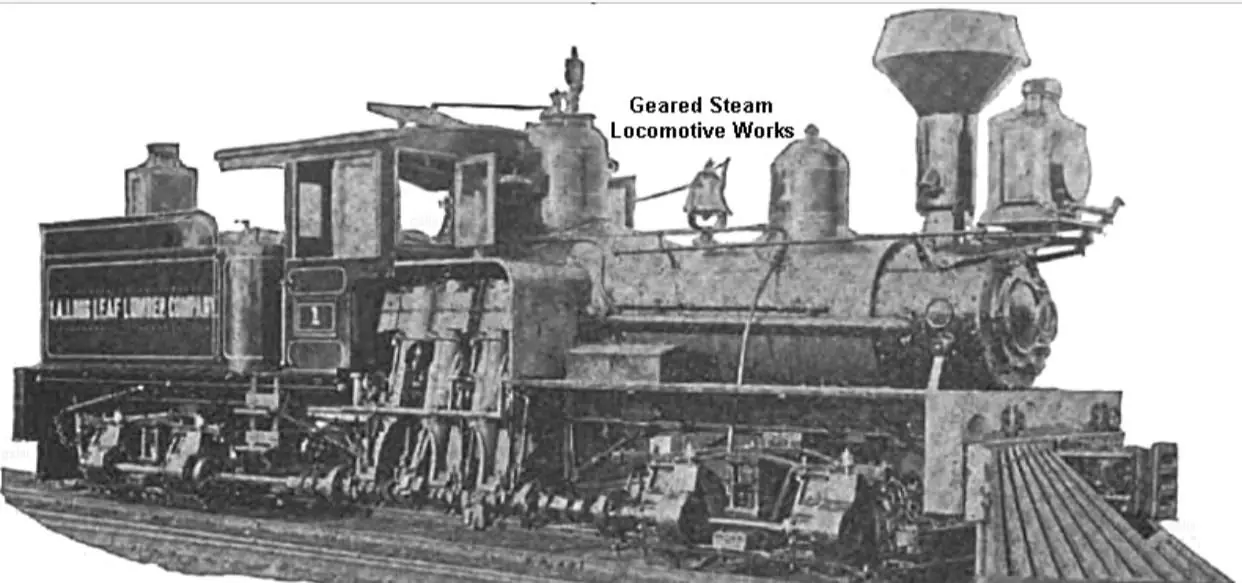
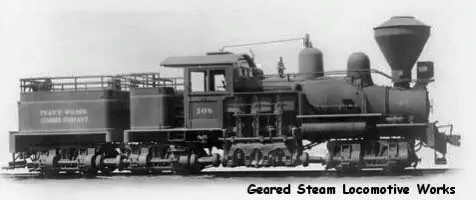
From Geared Steam Locomotive Works, these are geared steam locomotives used in Sabine Parish GearedStream.Com is a super cool and informative site for rail buffs. It is authored & Published by David E. Thomas
First photo- Louisiana Long Leaf Lumber Co. #1 - s/n 620 Built 09/07/1900 - Std. gauge - 10” x 12” cylinders - 29½” drivers - 32 tons - 2 trucks The company was based in Fisher, Louisiana. The locomotive operated on the company’s Victoria, Fisher & Western RR.
Second photo- Peavy-Wilson Lumber Co. #108 - s/n 3031 destined for Peason, Louisiana Built 3-31-1919 - Std. gauge - 11” x 12” cylinders - 32 drivers - 60 tons - 3 trucks
From the author- A little known sub-group of railroad steam locomotives consisted of engines that used gears together with steam cylinders (common on all steam locomotives) to produce more “constant” pulling power than the conventional and more prevalent “rod” type of steam locomotive. The most prevalent geared locomotives were Shays, Climaxes, and Heislers. Each were made by different companies with different means of implementing geared power to their drivers.
The geared locomotives were the “4 wheel drive” versions of their cousins, the “rod” locomotives. The geared locomotives were lighter, smaller, and had geared transmissions to provide steady, constant power to all wheels or drivers (as they are known in the railroad world).
For the most part, they were used in the lumber and mining industries. The rails were laid to the timber or minerals to provide a practical and economical means to transport these commodities out of their locations and to the mills for processing. The life span of particular section of track lasted no longer than the time it took to remove all the timber or minerals. Once the lumber or minerals were removed, the rail was pulled up and moved to other areas where they would be laid for the purpose of removing more timber or minerals. The idea was to “get in and get out” as quickly and as cheaply as possible. Unlike passengers or freight transported on the mainline railroads serviced by the “rod” locomotives, the logs and rocks didn’t care how bumpy or uncomfortable the ride was. This often meant the roadbed was constructed on sharper curves as well as rougher and steeper grades than those made for the “rod” locomotives. In at least one instance, one timber company actually laid and operated daily over rails that were laid through an active stream.